Introduction
Dear Streethunters.net Readers,
A few weeks ago, London photographer Simon King contacted me about a documentary he had just completed called Everything Happens All the Time.
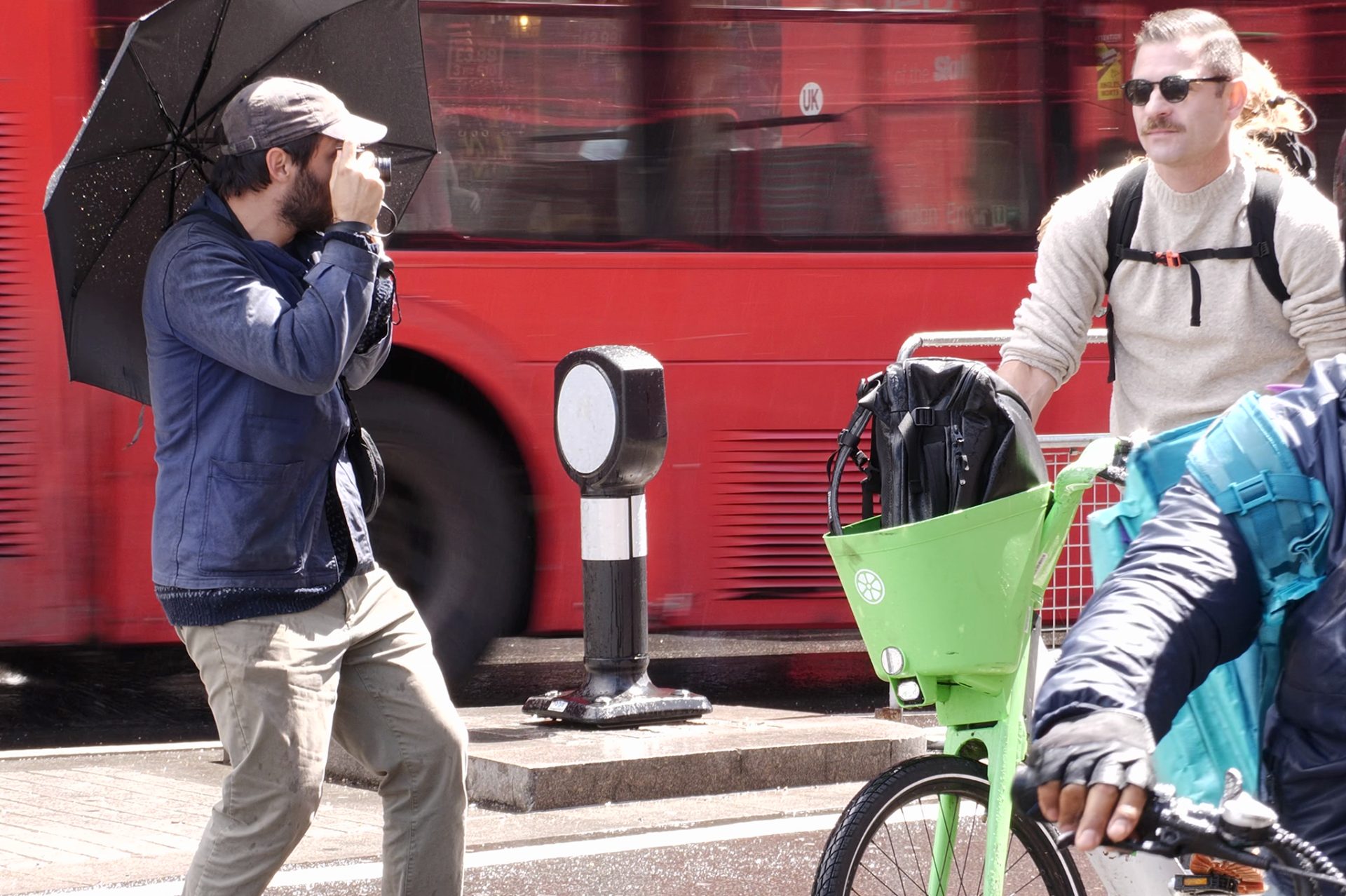
The film brings together 27 photographers connected to the London street photography community, all with different styles, personalities, backgrounds and levels of experience.
Manolis and I sat down and watched the whole thing from beginning to end. What stayed with me most was the strong sense of community running through it.
Street photography is usually thought of as quite a solitary activity. We walk for hours, often alone, looking for those tiny moments that might turn into something worth photographing. Simon’s documentary shows another side of it. Photographers meeting, talking, learning from one another, challenging each other and sharing the same passion for going out there and making photographs.
When Simon and I first discussed the film, he explained that he approached it as a “chorus of voices” rather than a collection of individual stories. That idea made me look at the documentary differently.
So rather than write a traditional review, I decided to ask Simon a few questions about the film, the people in it, the London street photography community and what making the documentary taught him as an artist.
A Short Interview with Simon King
The title, Everything Happens All the Time, almost feels like a definition of street photography in itself. Where did the title come from, and what does it mean to you in relation to photographing life on the street?
I tried hard not to “define” street photography, it’s too broad a genre, but I think as a title it covers two significant aspects, “everything” ie what people are looking at/for, and “the time” which is always relevant when catching something temporary. I think it’s also a bit of a statement about the film as a whole, which is frantic-paced, jumping from one thing to the next, and covering as much as I was able to in the runtime.
You brought together 27 photographers with very different styles, personalities and levels of experience. Was that variety something you deliberately wanted from the beginning, or did it happen naturally through the people you met and already knew?
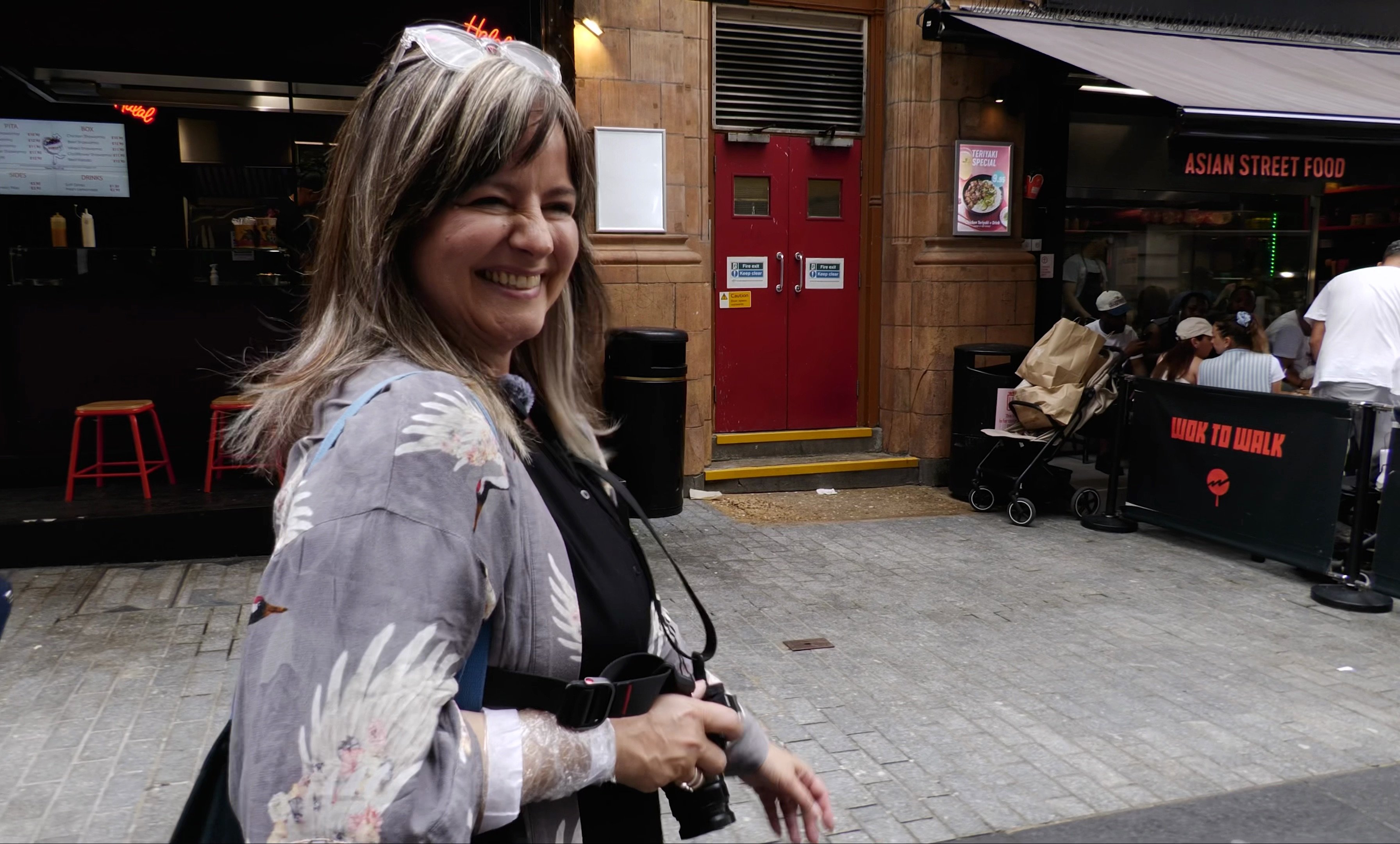
I didn’t have to search for anyone, these are all people I know, some for many years others more recently, but met while out on the streets photographing, they’re people who are putting in the practical work rather than just hanging out at socials, although that does happen too. I did make sure to try extra hard to include people I know have interesting and lesser known stories, or lesser heard from perspectives, but I didn’t have to seek these people out, London is diverse, the photography community is organically diverse, and the film reflects that reality.
When we spoke before, you described the film as a chorus of voices rather than a collection of individual stories. After spending so much time listening to all of these photographers, what did you realise they actually had in common?
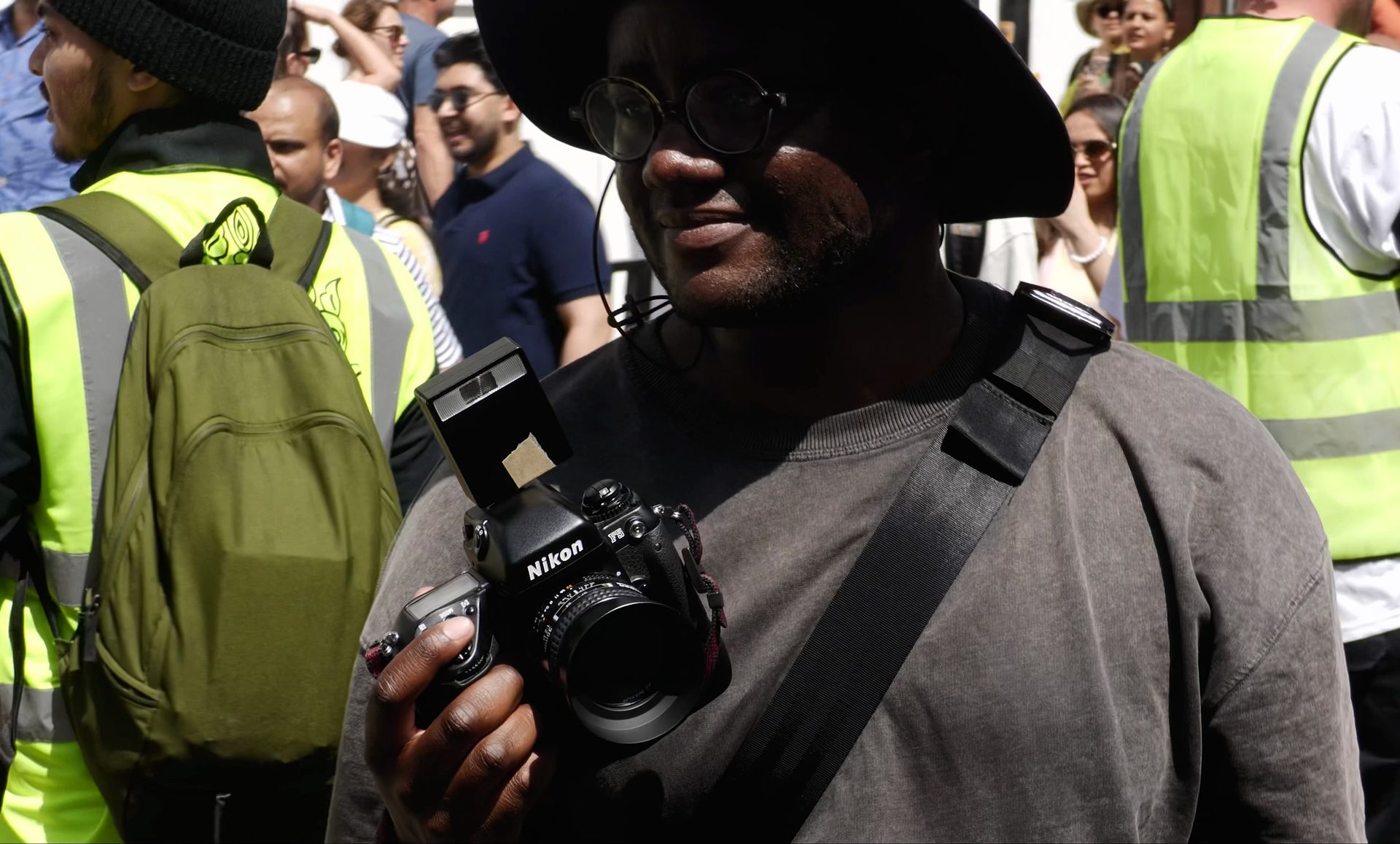
London, and myself. But also I think they express it well themselves, this drive, or motivation, even hunger or addiction, to keep stepping out the door with the goal of seeing whether or not it was worth it.
Was there anything somebody said during the interviews that genuinely surprised you or made you reconsider something you believed about street photography?
I often have conversations similar to what ended up in the film, so I don’t think anything really surprised me in that sense, but I was definitely struck by how vulnerable and emotionally honest they were with me on camera, which I think is one of the strengths of the film. They were willing to share failures, deeply personal stories and insight that I think is harder to find in this kind of interview format.
One thing that stayed with me after watching the film was the strong sense of community. Street photography is usually thought of as quite a solitary activity, but the film often shows the opposite. How important has that community been to you personally, and what do you think it gives photographers that they would not get by working entirely alone?
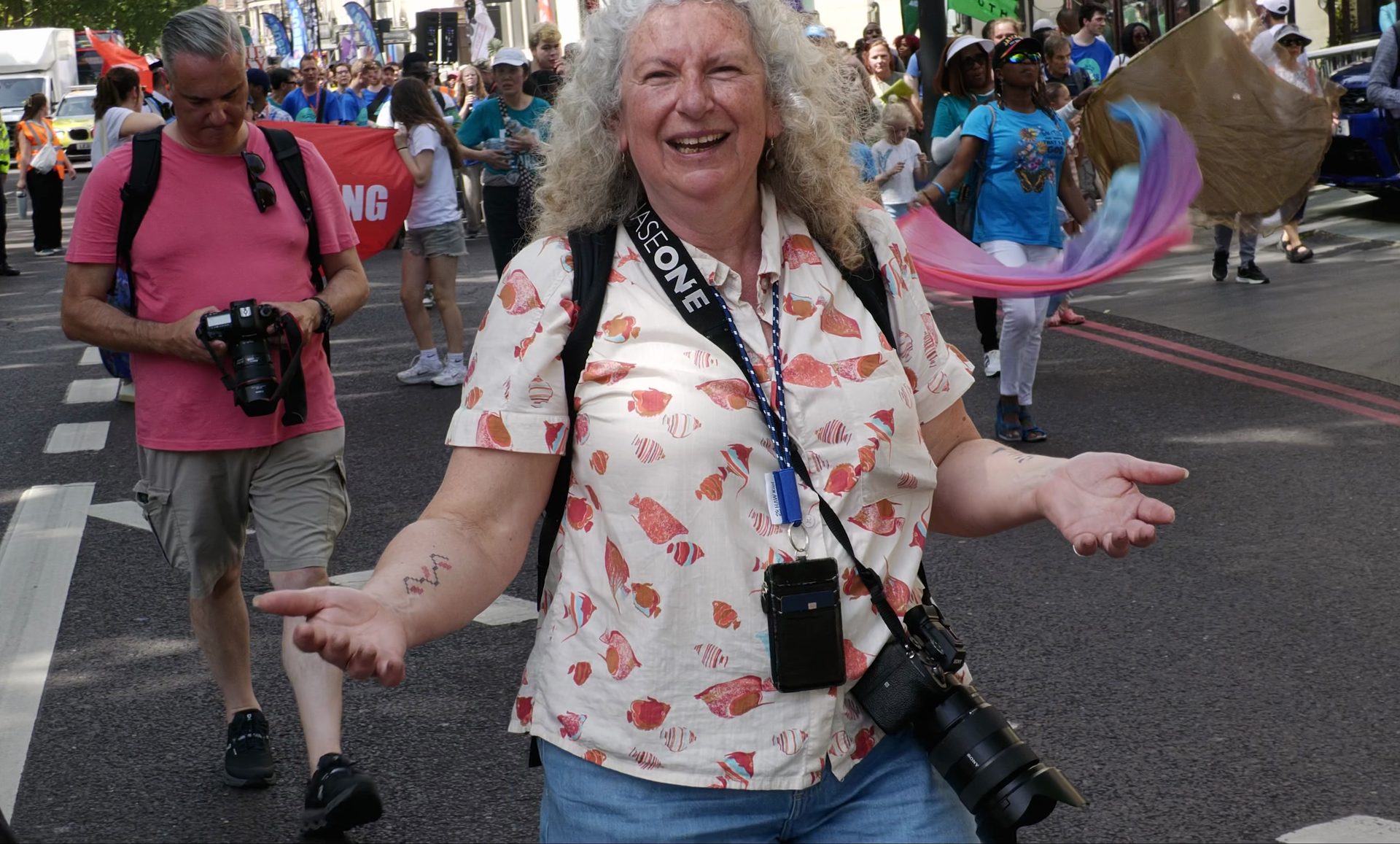
I agree, I think it’s easy to see the kind of romanticised “lone wolf” street shooter, but London is basically too small no to run into each other, and I think people who embrace that do find a joy in the shared social aspect of shooting together. It’s great for keeping things light, and sort of pushing each other to see differently, work differently, actively comment and point things out, and the work benefits from this kind of mutual learning and advocacy. Depending on the context there’s also the safety aspect, and mental health aspect of staying grounded, whereas if you sort of take on alone-ness as an aesthetic, it can be quite sad.
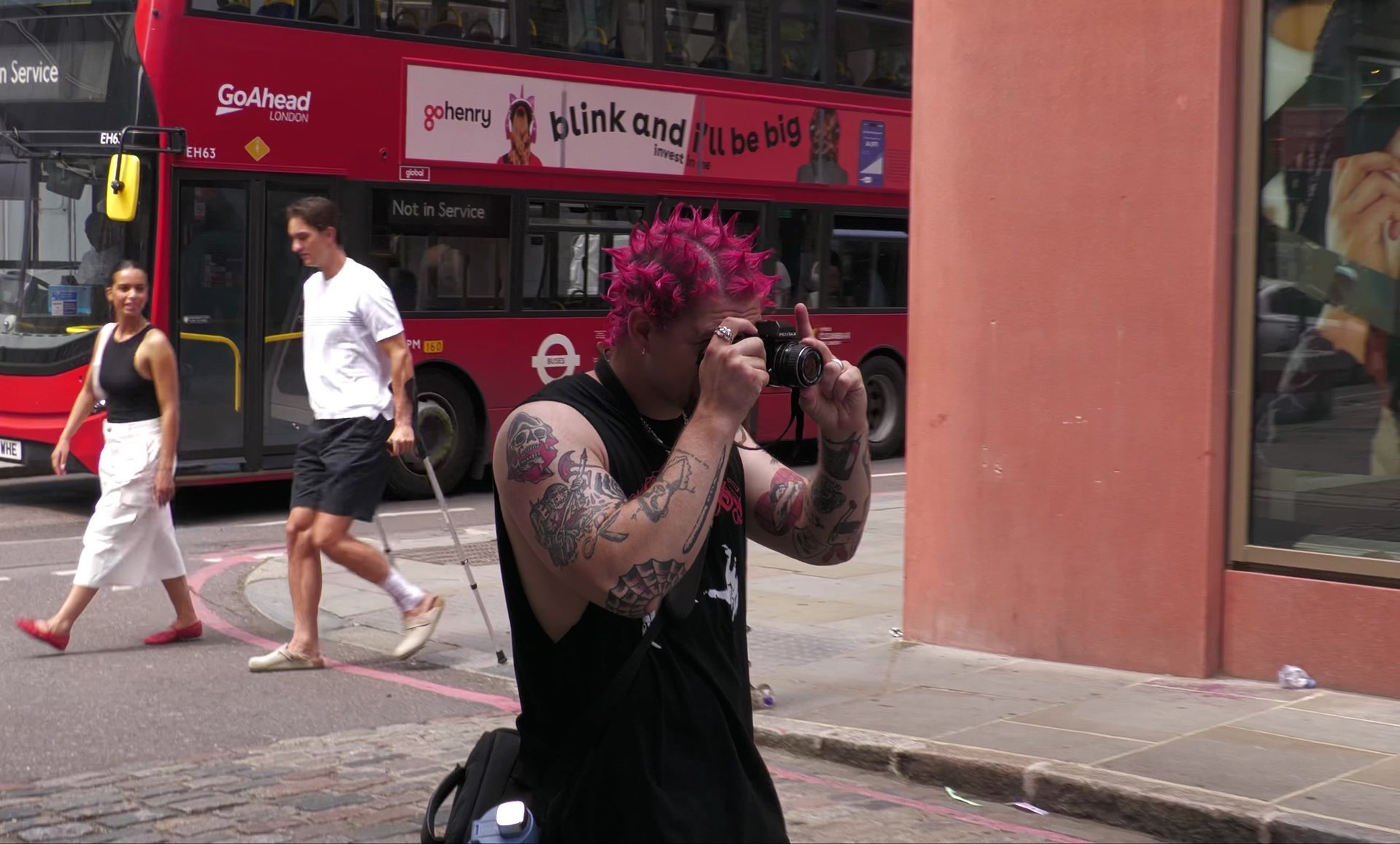
You have spoken quite openly about everything you learned technically while making the documentary, especially since filmmaking was relatively new territory for you. But what did you learn from the whole process as an artist? Did listening to so many photographers and then trying to bring their thoughts together into one film change anything about the way you see your own photography or your creative work in general?
It’s been a bit of an identity crisis really, I didn’t realise it but I so strongly identified as photographer and educator, but now there’s this new weight and expectation on me as “filmmaker”, like no one asked me after I put out a book what book I’ll do next, but lots of people have asked me what film I’m making next, when I haven’t even recovered from this first one! So I think it’s perspective on the medium, and appeal that there is behind filmmaking, compared to photography, which is maybe down to saturation. Everyone is a photographer, not as many are filmmakers. I’m still deciding what to do with that perspective.
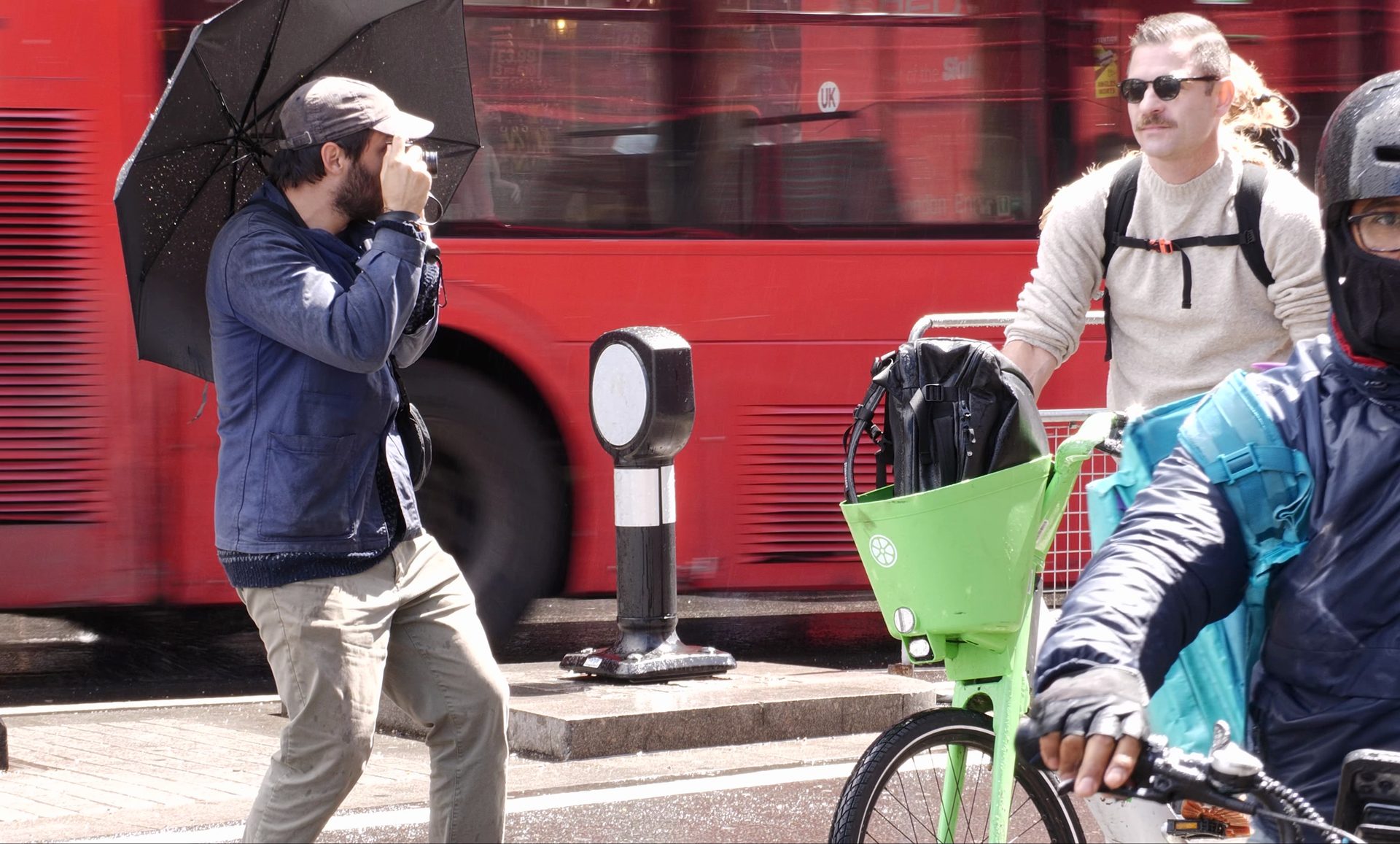
Looking at the film now that it is finished, do you also see it as a kind of document of London street photography at a particular moment in time? If somebody watches it again in 20 or 30 years, what would you hope they understand about the photographers, the community and the city you captured in 2026?
It’s definitely unique to here and now, especially when you look at the age range, from young and just starting out, to older and more seasoned professionals, people will come and go, not everyone actually lives in London, there’s commuters and visas and all sorts, so one day to the next it’s a slightly different group, but the consistent language is the pursuit itself, not the individuals, and I think that’s relatable regardless of time and place, it’s the same creative struggle that poets and adventurers and chefs and everyone else has been trying to grapple with. I hope that there’s something in the film that resonates in some way, even if it’s a minor aspect.
Watch Everything Happens All the Time
I particularly like Simon’s final answer.
The people will change. London will change. Photography itself will change. But the pursuit remains.
That desire to walk out of the door with a camera, not knowing whether you will come home with anything worthwhile, is something I think most street photographers understand very well. Some days you get lucky. Some days you walk for hours and get absolutely nothing. Yet, sooner or later, you go out and do it all over again.
Perhaps that is another meaning hidden inside the title.
Everything really does happen all the time. We just need to be there to see it.
You can watch Simon King’s full documentary Everything Happens All the Time below. The film is embedded here with Simon’s permission.
For more on Simon King, visit his Instagram @simonking_v.
Stay Sharp & Keep Shooting!

Leave a Reply